Showing posts with label Trending News. Show all posts
Showing posts with label Trending News. Show all posts
Sunday, April 12, 2020
Tennessee • Storm • Chattanooga
 10:53 PM |
 Posted by
bayan |

Sunday night storms damage utility pole near Dalton Mall, some roads closed through Monday morning
Walnut Avenue is closed between Lester Avenue and Airport Road near the Dalton Mall due to storm damage to a large utility pole, according to a news release sent before midnight Sunday.
Dalton police state Walnut Avenue will remain closed near the mall through the morning commute so drivers should plan alternate routes.
There was a threat of tornadoes in southeast Tennessee and North Georgia Sunday night in Grundy, Marion and Hamilton counties in Tennessee. There was also a threat of tornadoes in Walker, Catoosa, Whitfield, Murray, Chattooga, Gordon and Gilmer counties in Georgia and Jackson and DeKalb counties in Alabama, according to our news partner WRCB.
Dalton Police: Walnut Avenue closed until Monday morning due to storm damage

Dalton Police expect Walnut Avenue to remain closed near the mall through the morning commute so drivers should plan alternate routes.
what to do after a tornado
10:45 PM |
Posted by
bayan |
- Stay Informed:Continue to listen to local news or a
NOAA Weather Radio to stay updated about tornado watches and warnings.
Multiple rounds of thunderstorms capable of producing tornadoes are
possible during severe weather outbreaks.

- Contact Your Family and Loved Ones: Let your family and close friends know that you're okay so they can help spread the word. Text messages or social media are more reliable forms of communication than phone calls.
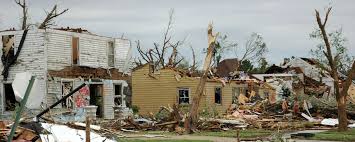
- Assess the Damage: After the threat for tornadoes has ended, check to see if your property has been damaged. When walking through storm damage, wear long pants, a long-sleeved shirt, and sturdy shoes. Contact local authorities if you see power lines down. Stay out of damaged buildings. Be aware of insurance scammers if your property has been damaged.
- Help Your Neighbor: If you come across people that are injured and you are properly trained, provide first aid to victims if needed until emergency response teams arrive.
 Labels:
Trending News
tornado watch vs warning vs emergency
10:43 PM |
Posted by
bayan |
A tornado emergency is an enhanced version of a tornado warning, which is used by the National Weather Service (NWS) in the United States during imminent, significant tornado
occurrences in highly populated areas. Although it is not a new warning
type from the NWS, issued instead within a severe weather statement or
in the initial tornado warning, a tornado emergency generally means that
significant, widespread damage is expected to occur and a high
likelihood of numerous fatalities is expected with a large, strong to
violent tornado.[1][2]
These enhanced warnings are intended to convey the urgency of the weather situation to the general public, who are advised to take safety precautions immediately if they are in or near the projected path of a large tornado or its accompanying thunderstorm; tornado emergencies are usually identified following the preceding storm summary in the tornado warning product, which itself will denote visual or radar confirmation of "a large and extremely dangerous [or destructive] tornado" that is ongoing; precautionary action statements in the product also recommend that people in the storm's path find shelter in an underground shelter or safe room to protect themselves from the storm, if available.
While many tornadoes observed to be at or larger than ¼-mile in width have been documented to have produced catastrophic damage falling under the "strong" or "violent" categories (EF2–EF5) of the Enhanced Fujita Scale, there have been instances in which tornadoes of this intensity have resulted in very few to no fatalities and, occasionally, have produced damage corresponding to the Enhanced Fujita Scale's "weak" category (EF0–EF1).
Labels:
Trending News
How to Preparing for a Tornado
10:39 PM |
Posted by
bayan |
What is StormAware?
Being StormAware means that you and your family not only know how to protect yourselves in the event of a tornado or severe weather, but that you are aware whenever the weather forecast calls for a chance of severe storms; that during those times you monitor weather for severe weather watches and warnings.It means that you have planned in advance where you will take shelter at home, work and at other places that you and your family regularly visit.
Being StormAware means you have a NOAA weather radio in case of severe weather warnings in the middle of the night and that you have signed up for severe weather alerts by text message or other means.

Basic Tips
Don’t wait for severe weather to arrive to start thinking about keeping yourself and your family safe. Being StormAware means having a plan before severe weather strikes. The following tips can help you create a tornado-safety plan.Quick Tornado Facts
Parents should make sure their children know:
- What a tornado is
- What tornado watches and warnings are
- What county or parish they live in (warnings are issued by county or parish)
- How to take shelter, whether at home or at school
- Create a plan for where you and your family will go in the event of a tornado — at home, at work and at relatives’ or friends’ homes that you visit frequently. Always be alert to changing weather conditions.
- Pick a safe room in your home where household members and pets may gather during a tornado. This should be a basement, storm cellar or an interior room on the lowest floor with no windows.
- Listen to NOAA Weather Radio or to commercial radio or television newscasts for the latest information.
- Check with your work and your children’s school and day care center regarding tornado emergency plans. Every building has different safe places. It is important to know where they are and how to get there in an emergency.
- Make sure everyone understands how tornado siren warning systems work and if a warning system is installed in your area.
- Mark clearly where your first-aid kit and fire extinguishers are located. Make sure the first-aid kit is properly stocked with medical supplies.
- Teach your family how to administer basic first aid, how to use a fire extinguisher, and how and when to turn off water, gas, and electricity in your home.
- Mark clearly where the utility switches or valves are located so they can be turned off – if time permits – in an emergency.
- Learn the emergency dismissal policy for your child’s school.
Emergency Kit
Keep the following items in a container that can be easily carried.- Water and canned or dried food – families should set aside one gallon of water per person per day, to last three days, and a three-day supply of food per person. The food should be nonperishable items that don’t need to be cooked, such as tuna and crackers. Remember to include a manual can opener. If there’s an infant in the house, include formula and baby food.
- Battery powered radio
- Flashlight
- Extra batteries for the radio and flashlight
- Prescription medications
- First-aid kit
Storing Important Documents
Store the following documents in a fire- and water-proof safe:- Birth certificates
- Ownership certificates (autos, boats, etc.)
- Social security cards
- Insurance policies
- Will
- Household inventory:
1. List of contents of household; include serial numbers, if applicable
2. Photographs or videotape of contents of every room
3. Photographs of items of high values, such as jewelry, paintings, collection items
Labels:
Trending News
Tornado Safety - National Weather Service
10:35 PM |
Posted by
bayan |
A tornado is a violently rotating column of air extending from the
base of a thunderstorm down to the ground. Tornadoes are capable of
completely destroying well-made structures, uprooting trees, and hurling
objects through the air like deadly missiles. Tornadoes can occur at
any time of day or night and at any time of the year. Although tornadoes
are most common in the Central Plains and the southeastern United
States, they have been reported in all 50 states.

This website is designed to teach you how to stay safe when a tornado threatens. If you know what to do before, during and after a tornado, you will minimize your risk of injury and increase your chances of survival. You'll also find links to research, past events other topics of interest as well as downloadable safety handouts about thunderstorms, lightning, and tornadoes.

This website is designed to teach you how to stay safe when a tornado threatens. If you know what to do before, during and after a tornado, you will minimize your risk of injury and increase your chances of survival. You'll also find links to research, past events other topics of interest as well as downloadable safety handouts about thunderstorms, lightning, and tornadoes.
Labels:
Trending News
Subscribe to:
Posts (Atom)

